
If you’ve opened your utility bill lately and felt the sting, you’re not alone. New Mexico homeowners are taking a hard look at where their energy dollars are going, and many are discovering that outdated insulation and inefficient home systems are the main culprits. At Millers Insulation, we’ve helped countless families cut their monthly costs through strategic upgrades that pay for themselves over time. The good news? You don’t need to overhaul your entire home to see real savings. Smart, targeted improvements can dramatically lower utility bills while making your home more comfortable year-round.
How Poor Insulation Drives Up Your Energy Costs
When your insulation isn’t doing its job, your HVAC system works overtime to maintain comfortable temperatures. This constant strain shows up directly on your monthly statement. In New Mexico’s climate, with hot summers and cold winters, the right insulation acts as a barrier that keeps conditioned air where it belongs—inside your home.
Signs that poor insulation is costing you money include rooms that feel too hot or cold regardless of thermostat settings, drafts around windows and doors, and unexplained spikes in heating or cooling costs. Many homeowners don’t realize their attic insulation has settled or degraded over time, creating gaps that leak expensive conditioned air. An energy assessment can pinpoint exactly where your home is losing efficiency and help you prioritize upgrades that will deliver the biggest impact on your bills.

The Real Impact of Attic Upgrades in New Mexico
Your attic is ground zero for energy loss in most homes. In summer, a poorly insulated attic can reach temperatures above 150 degrees, radiating heat down into your living spaces and forcing your air conditioner to run constantly. In winter, warm air rises and escapes through inadequate insulation, leaving you cold despite a hard-working furnace.
Upgrading your attic with blown-in insulation can reduce your heating and cooling costs by 15-20% annually (U.S. Department of Energy, 2023). For New Mexico homeowners, that translates to hundreds of dollars in savings each year. Modern materials like blown-in fiberglass fill gaps that traditional batt insulation might miss, creating a more effective thermal barrier. When combined with proper air sealing, attic upgrades address both conductive and convective heat loss, tackling the problem from multiple angles for maximum efficiency.
Smart Home Upgrades and Their Impact on Utility Bills
| Upgrade Type | Where It Helps Most | Typical Energy Savings | Best For New Mexico Homes |
|---|---|---|---|
| Attic Blown-In Insulation | Attics | 15–20% on heating & cooling | Homes with hot summers and cold winters |
| Air Sealing Services | Attics, walls, doors, penetrations | Up to 30% reduction in energy waste | Homes with drafts or uneven temperatures |
| Smart Thermostat | Whole home HVAC system | 8–10% annually | Households with variable schedules |
| Radiant Barrier Services | Attics | Lower attic temps by up to 30° | Homes exposed to intense summer sun |
| Spray Foam Insulation | Walls, rim joists, hard-to-reach areas | High efficiency with reduced air leakage | Older homes or complex framing |
| LED Lighting | Whole home | Up to 75% less energy per bulb | Easy upgrades with quick payoff |
Smart Thermostats and Insulation: A Powerful Combination
Smart thermostats get a lot of attention as energy-saving devices, and for good reason—they can reduce heating and cooling costs by automatically adjusting temperatures based on your schedule and preferences. However, if your home has poor insulation, you’re essentially trying to heat or cool the outdoors. The thermostat will still run your HVAC system constantly to maintain your desired temperature, just with slightly better timing.
The real magic happens when you pair smart temperature control with quality insulation and air sealing services. Once your home’s thermal envelope is tight, a smart thermostat can work with far less energy to maintain comfort. You’ll notice your HVAC system cycles less frequently, and those micro-adjustments the thermostat makes actually translate to lower bills instead of just shifting when your system runs.
Why Professional Air Sealing Makes a Difference
Air sealing is one of the most cost-effective upgrades you can make to lower utility bills, yet it’s often overlooked. Even the best insulation can’t work properly if air is leaking through cracks, gaps, and penetrations throughout your home. These leaks force your HVAC system to work harder and run longer, directly increasing your energy costs month after month.
Professional air sealing targets the worst offenders: areas around window and door frames, electrical outlets, plumbing penetrations, attic access points, and gaps where walls meet foundations. These small openings add up quickly—the equivalent of leaving a window wide open year-round. According to the U.S. Department of Energy (2023), air sealing combined with insulation can reduce energy waste by up to 30%. This approach delivers substantial savings at a fraction of the cost of major renovations, making it one of the smartest investments for homeowners serious about cutting their utility bills.
LED Lighting and Radianat Barrier Services
LED bulbs use 75% less energy than traditional incandescent lighting and last significantly longer. While the savings from switching bulbs alone won’t revolutionize your utility bill, every bit helps—and LEDs have the added benefit of producing less heat, which means less work for your air conditioner during summer months.
Radiant barrier services take a different approach to managing heat. Installed in attics, radiant barriers reflect heat away from your living spaces rather than absorbing it. In New Mexico’s intense summer sun, this can reduce attic temperatures by up to 30 degrees, which means your air conditioner doesn’t have to work as hard. When paired with adequate insulation, radiant barriers create a double defense against heat transfer.
Is Blown-In Insulation Worth It for Older Homes?
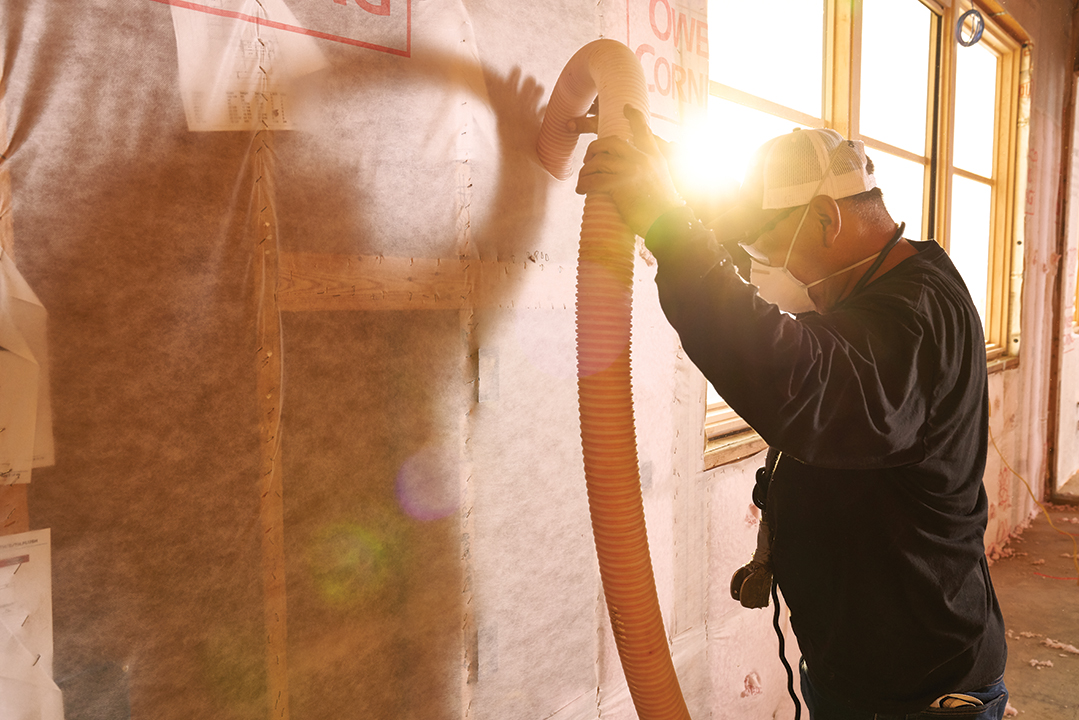
Older homes often have settled or degraded insulation that no longer meets current efficiency standards. Blown-in insulation is particularly well-suited for retrofits because it can fill irregular spaces, get around obstacles like wiring and pipes, and add R-value without major demolition or reconstruction.
For homes built before 1985, the existing insulation likely falls short of what’s now recommended for New Mexico’s climate zones. Adding blown-in fiberglass can bring your home up to modern standards, reducing energy usage and improving comfort. The installation process is relatively quick and non-invasive, and the payback period—the time it takes for energy savings to equal the installation cost—typically ranges from two to four years. After that, the savings continue for decades.
Available Rebates for Energy Upgrades
Energy-efficient home improvements, such as insulation upgrades, may qualify for financial incentives that make them more affordable, such as the rebates offered by New Mexico Gas Company. With a PNM Home Energy Checkup, you may qualify for additional rebates.
To take advantage of these programs, documentation is important. Keep detailed records of your insulation project, including invoices and specifications of materials used. Work with manufacturers like Owens Corning and Johns Manville, which produce products that meet program requirements. Many financing options are also available through partners like GreenSky and Service Finance, making it easier to start saving now while spreading upgrade costs over time.
How Much Can You Actually Save?
The Department of Energy estimates that homeowners can save an average of 15% on heating and cooling costs—or an average of 11% on total energy costs—by properly insulating attics, crawl spaces, and basement rim joists. (U.S. Department of Energy, 2023) For a New Mexico household spending $200 per month on utilities, that’s $264 per year in savings from insulation alone.
When you combine insulation with air sealing and other smart upgrades, the savings increase. A comprehensive approach that addresses your home’s biggest energy leaks can reduce utility bills by 20-30% or more. Over the lifespan of your insulation—which can be 20 years or longer—that adds up to thousands of dollars staying in your pocket instead of going to the utility company.
Making the Decision: Where to Start
The most effective upgrades are the ones that address your home’s specific weak points. Start with a professional energy assessment to identify where you’re losing the most energy and money. For most New Mexico homes, attic insulation and air sealing deliver the fastest payback and most noticeable comfort improvements.
From there, you can layer in additional upgrades like smart thermostats, LED lighting, and radiant barriers. The key is to think of energy efficiency as a system—each improvement works better when it’s part of a coordinated strategy. By focusing on your home’s thermal envelope first, you create a foundation that makes every other upgrade more effective and helps you see the lower utility bills you’re working toward.
Contact us today to schedule your free assessment and discover which upgrades will make the biggest difference in your home’s comfort and energy costs.
Sources:
U.S. Department of Energy. (2023). Insulation.
https://www.energy.gov/energysaver/insulation
U.S. Department of Energy. (2023). Air sealing your home.
https://www.energy.gov/energysaver/air-sealing-your-home
U.S. Department of Energy. (2023). LED lighting.
https://www.energy.gov/energysaver/led-lighting
U.S. Department of Energy. (2023). Savings from insulation upgrades.