
Case Study Details
Location:
Property Type:
Project Dates:
2024
Products Used:
- 2-Pound Closed-Cell Spray Foam Insulation
- Blown-In Fiberglass Insulation
- Owens Corning Materials
Project Summary
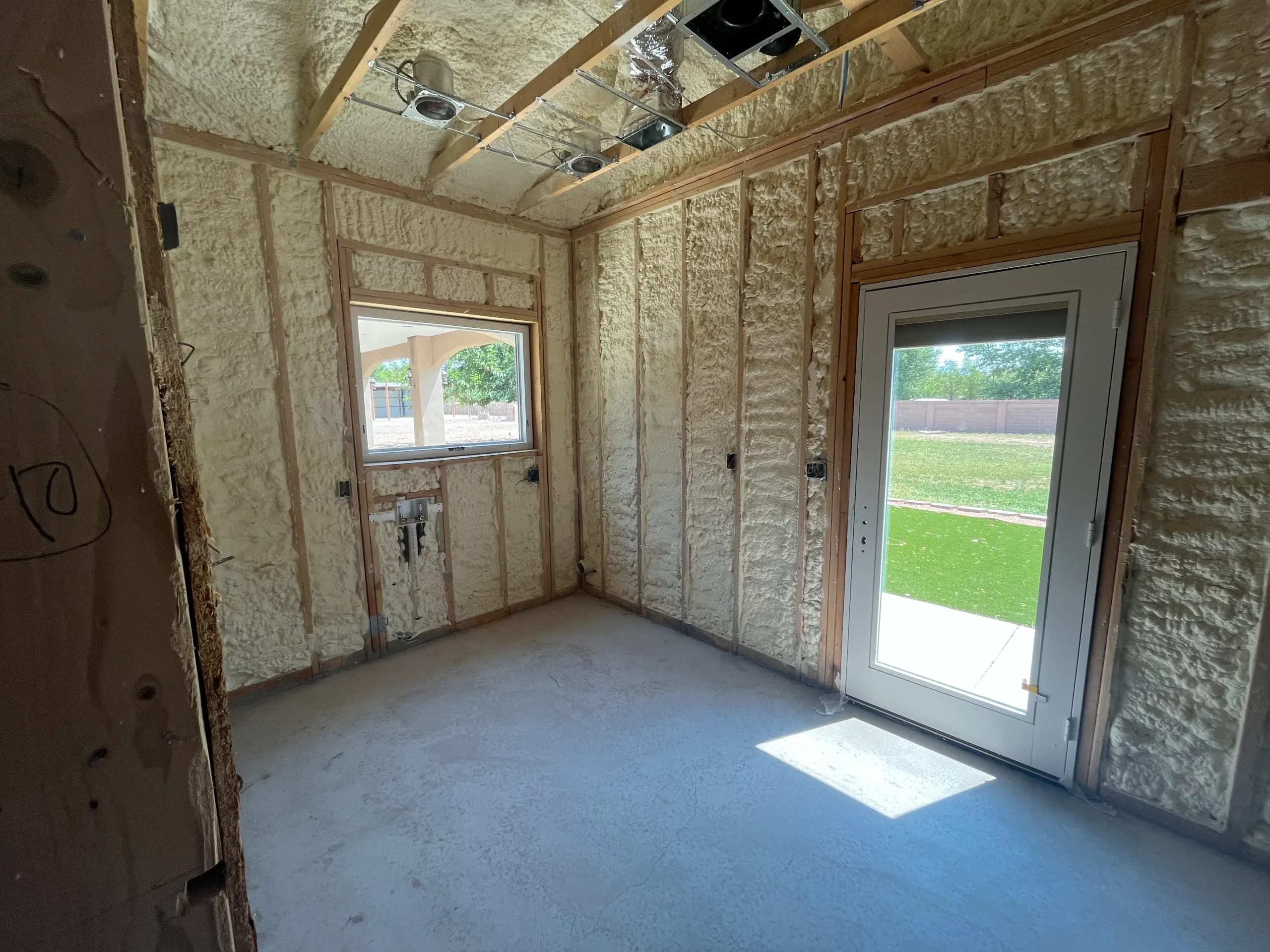
Millers Insulation completed a new construction insulation project combining spray foam and blown-in fiberglass applications. This multi-material approach delivered strong thermal performance throughout the home, with closed-cell spray foam providing superior air sealing in walls and storage areas while also acting as a vapor barrier to help control moisture. Blown-in fiberglass offered cost-effective coverage in ceiling spaces, rounding out a balanced insulation system designed for long-term comfort and efficiency.
The Challenge
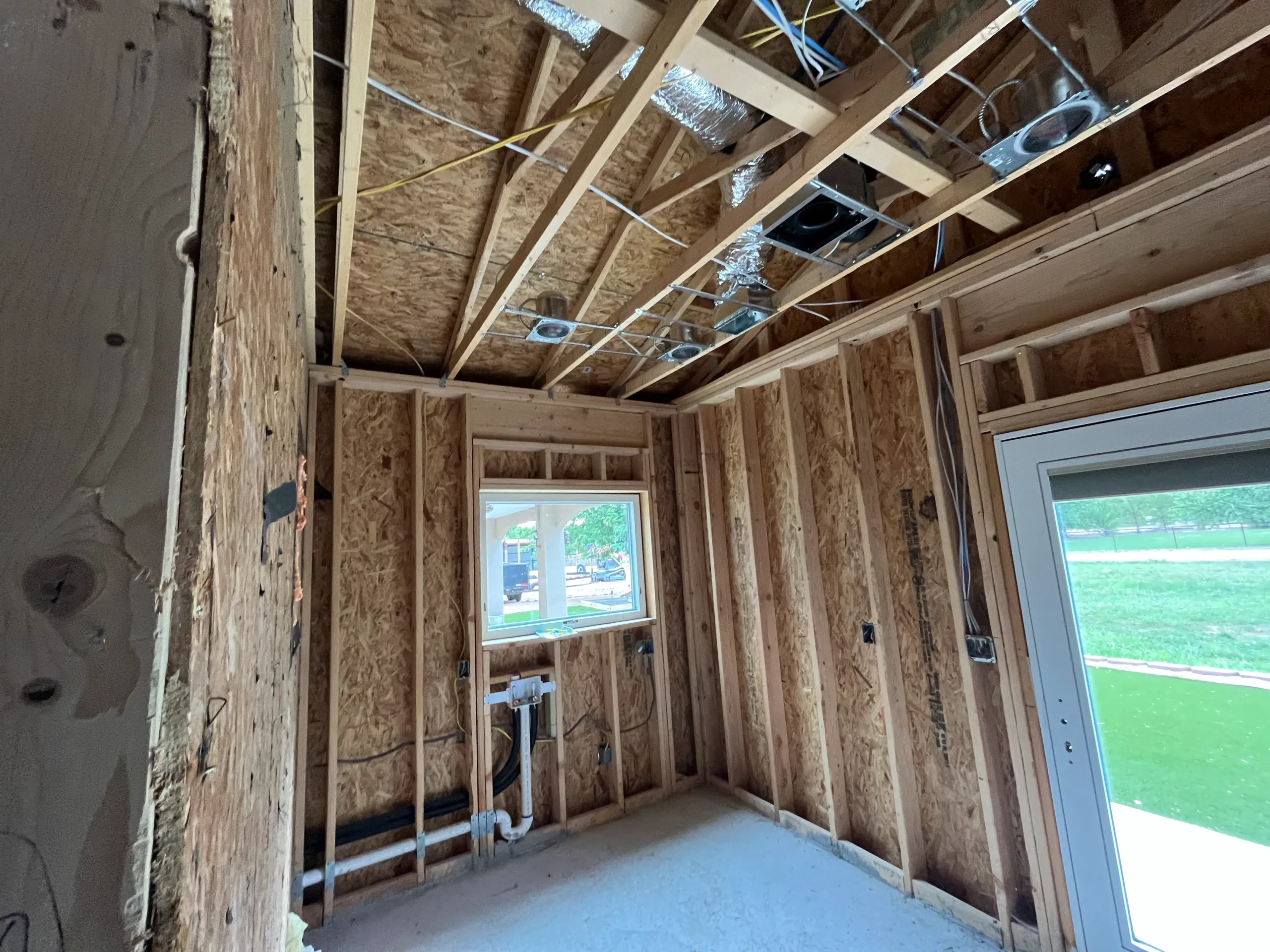
The new construction required a balanced insulation strategy that would meet modern energy efficiency standards while accommodating different areas of the home. The project needed to provide maximum R-value in the attic, complete air sealing in conditioned wall cavities using closed-cell spray foam that also serves as a vapor barrier, and durable protection in storage areas exposed to temperature fluctuations.
Our Solution
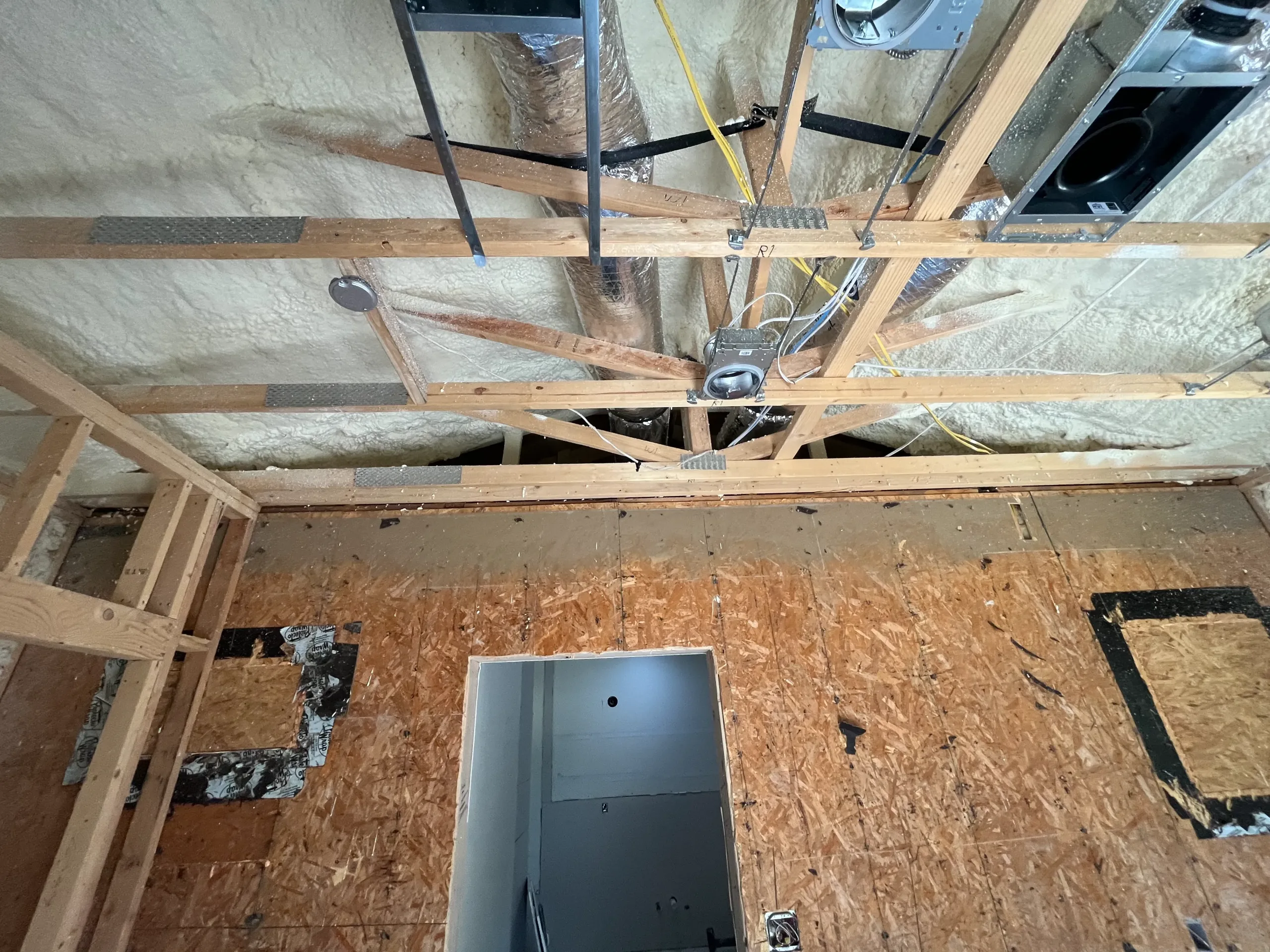
Our insulation contractors designed a dual-material system using 2-pound closed-cell spray foam in wall cavities and storage areas, combined with blown-in fiberglass in ceiling spaces. This approach delivers strong air sealing where it matters most, with closed-cell spray foam also serving as a vapor barrier, while keeping attic insulation cost-effective. The spray foam creates an airtight thermal barrier in the walls, and the blown-in fiberglass fills in around ceiling joists and other obstacles for consistent coverage.
Materials Used
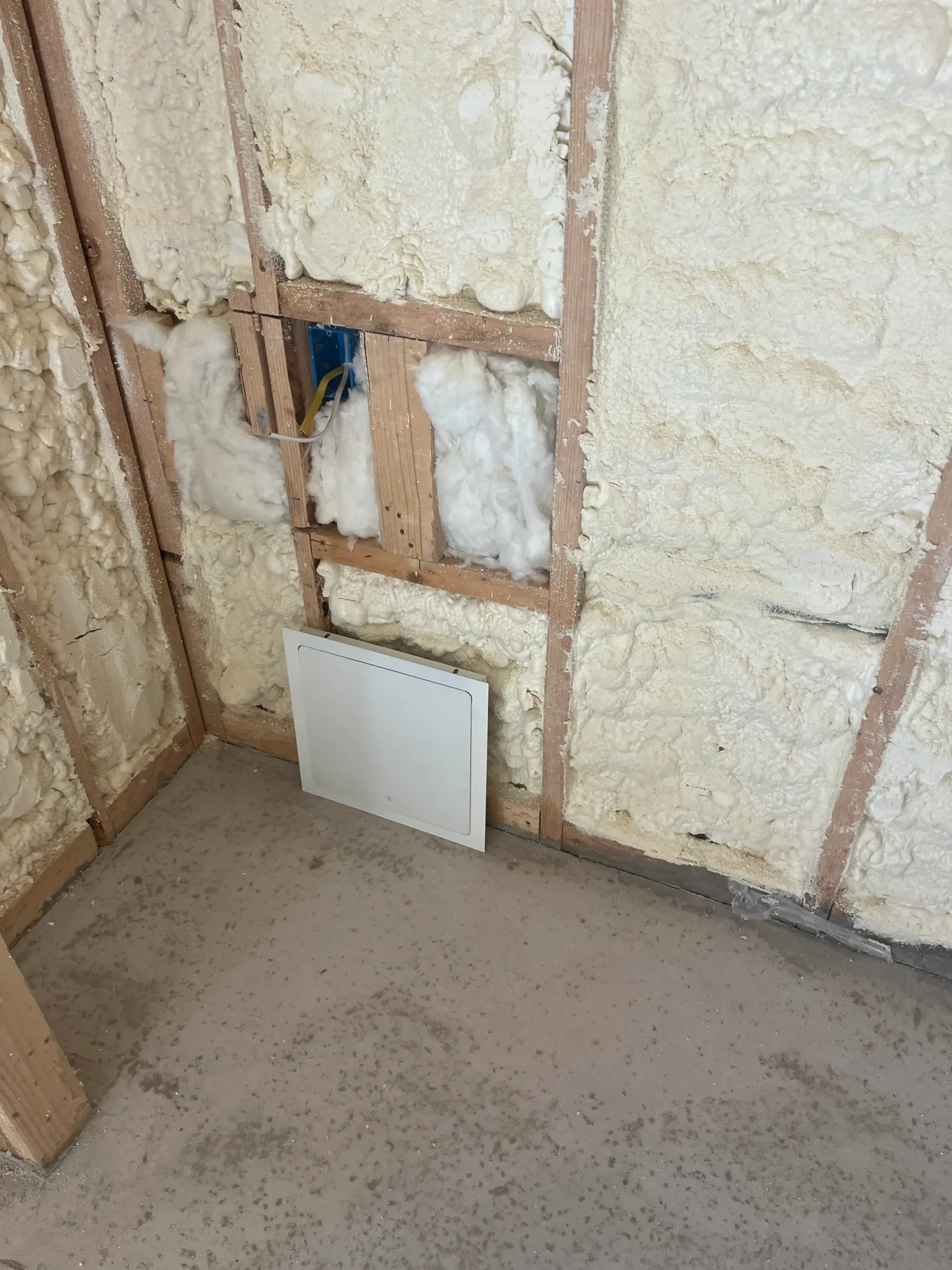
- Huntsman 2-Pound Closed-Cell Spray Foam – Applied to all exterior walls and storage area surfaces for maximum R-value per inch, as well as a complete air & vapor barrier
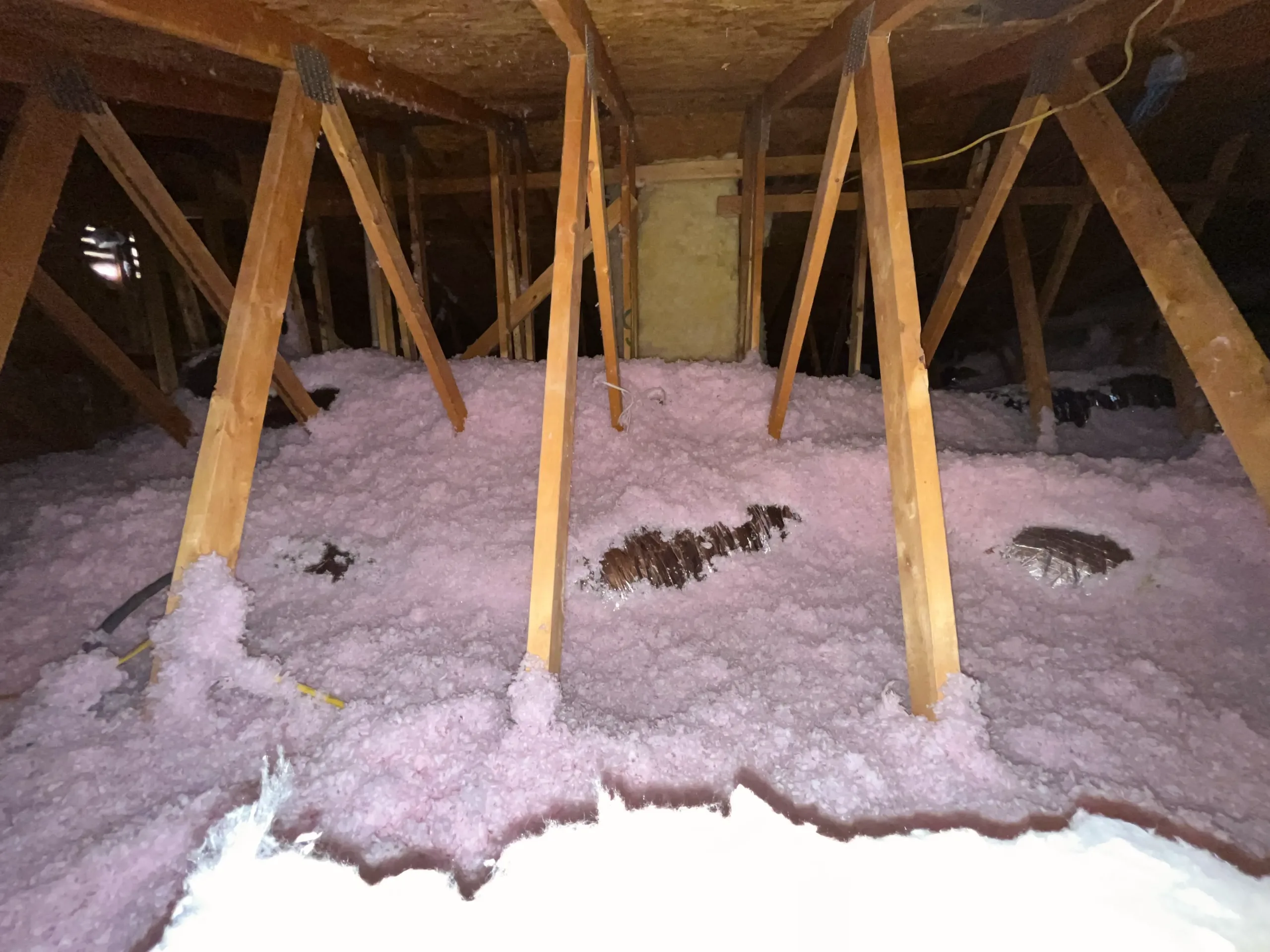
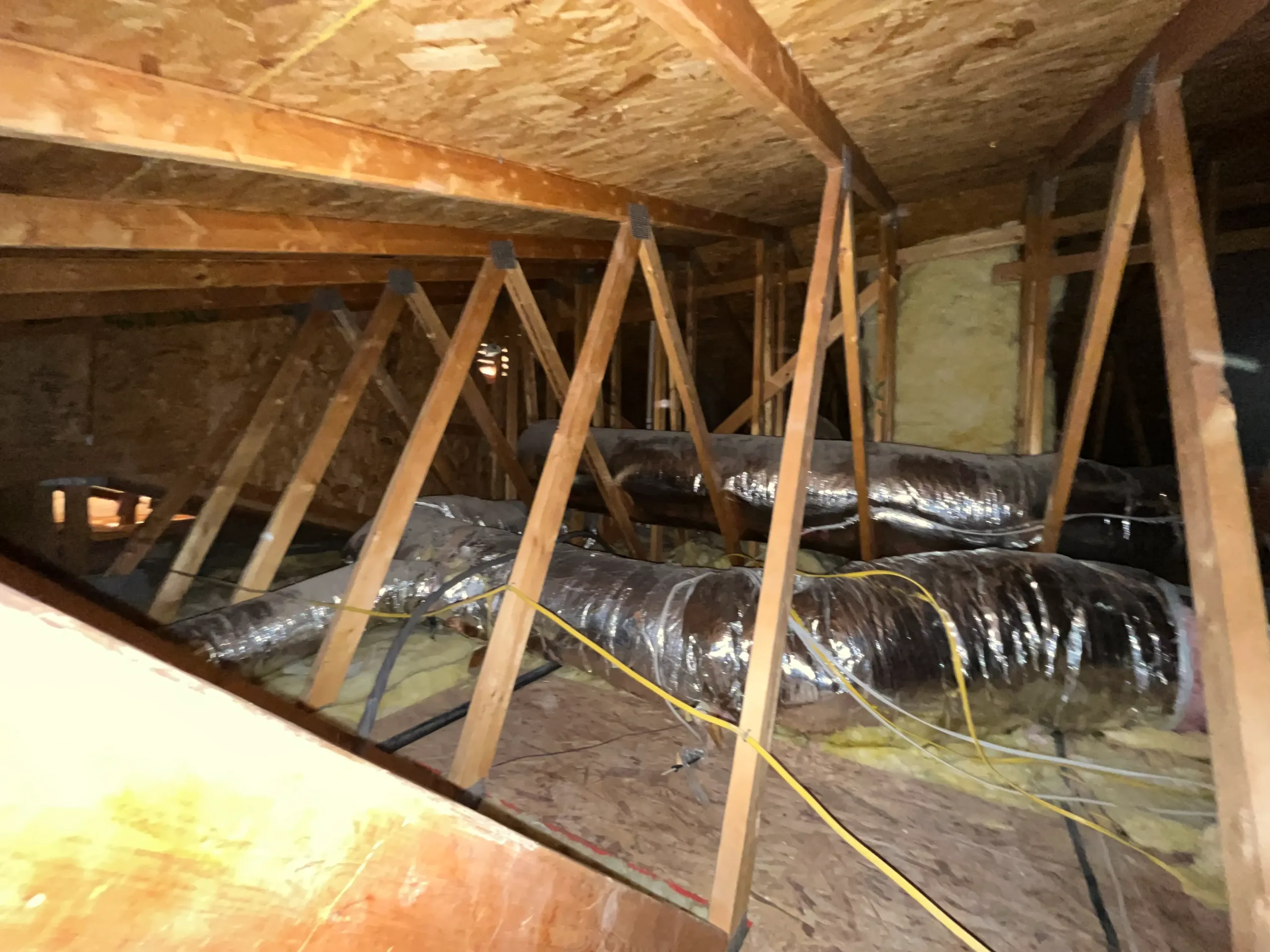
- Owens Corning Blown-In Fiberglass – Installed in attic ceiling spaces for uniform coverage and optimal thermal performance
- Professional-Grade Sealants – Used around electrical boxes, penetrations, and transitions between materials
Process
Our certified team began with spray foam application in wall cavities and the storage area, carefully controlling thickness to achieve specified R-values while maintaining proper cavity depth for drywall installation. The closed-cell foam expanded to fill all gaps around electrical boxes, plumbing penetrations, and framing irregularities. Following spray foam curing, our crew installed blown-in fiberglass in ceiling spaces using calibrated blowing equipment to achieve uniform depth and density. The installation sequence allowed each material to be applied in optimal conditions with proper ventilation and temperature control.
Results & Benefits
The homeowner received a high-performance thermal envelope that exceeds New Mexico energy efficiency standards. The spray foam walls provide exceptional air sealing while also functioning as a vapor barrier, helping control moisture, eliminate drafts, and reduce HVAC workload. Blown-in fiberglass in the ceiling delivers consistent R-values without gaps or compression. The storage area maintains more stable temperatures year-round thanks to closed-cell foam coverage. This combination of materials optimizes both performance and value, with the homeowner expecting significant energy savings from day one.
Project Gallery
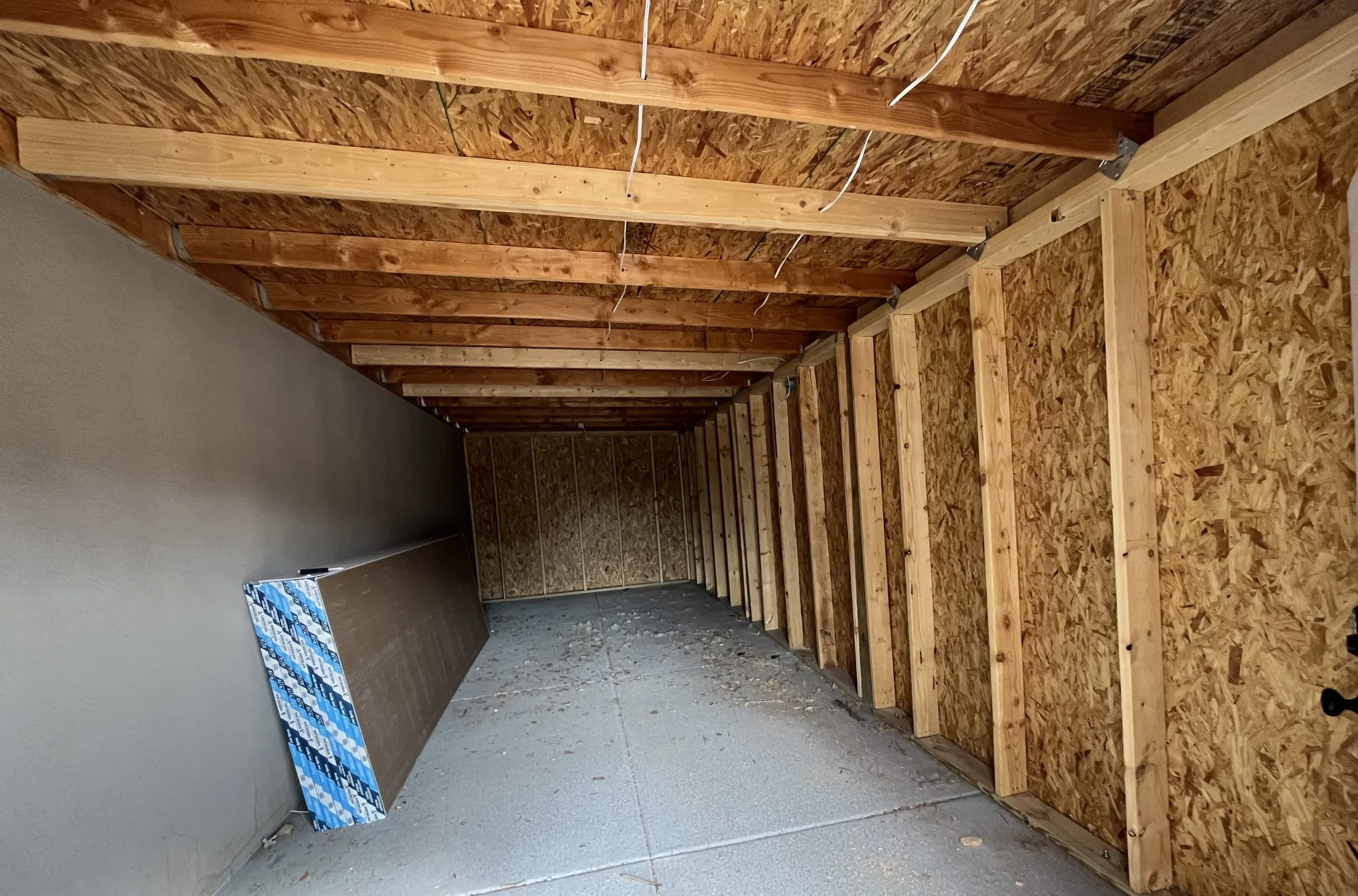
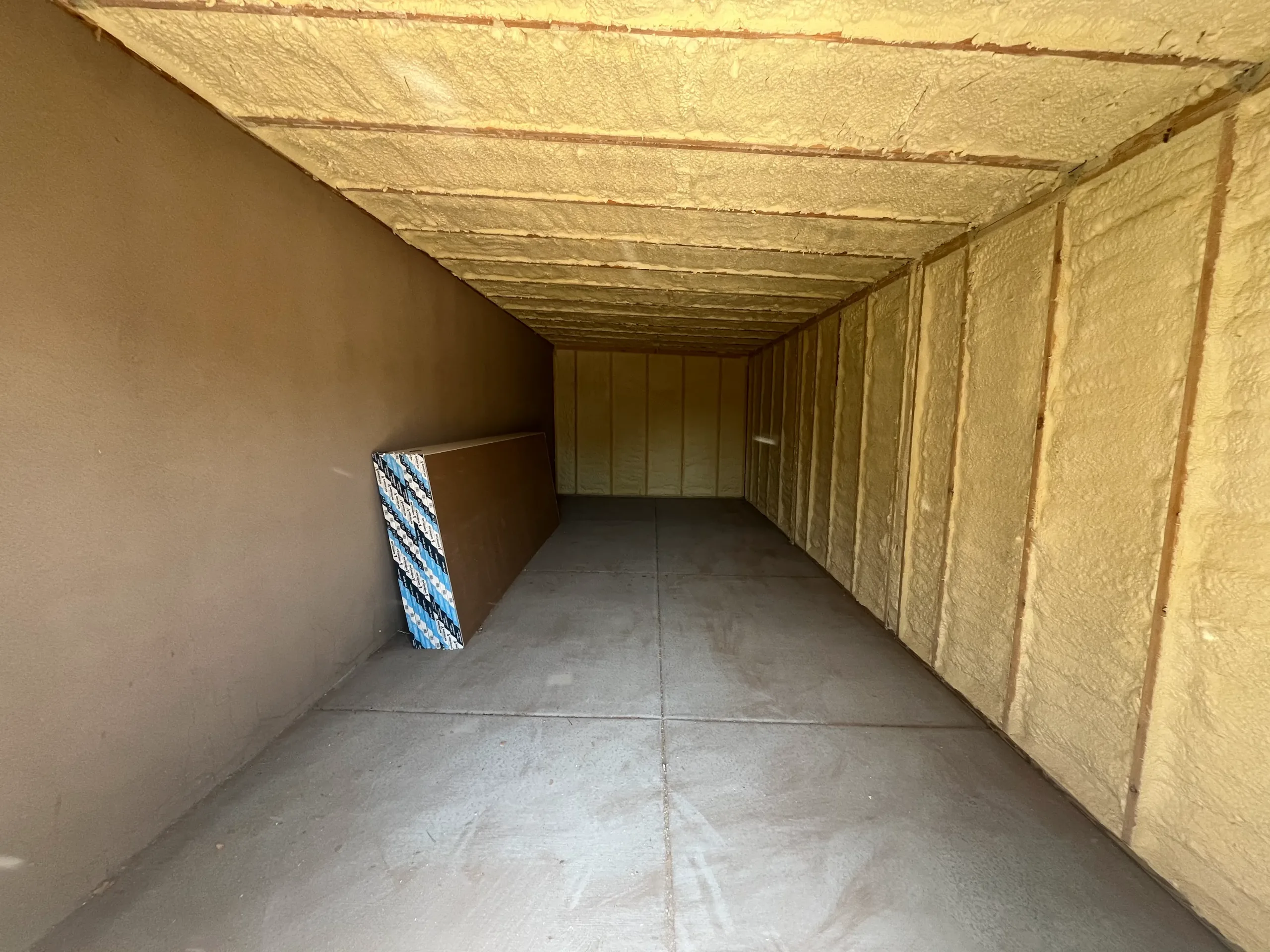
Highlights
- Complete air & vapor sealing in all exterior wall cavities using 2-pound spray foam
- Uniform blown-in fiberglass coverage throughout ceiling spaces
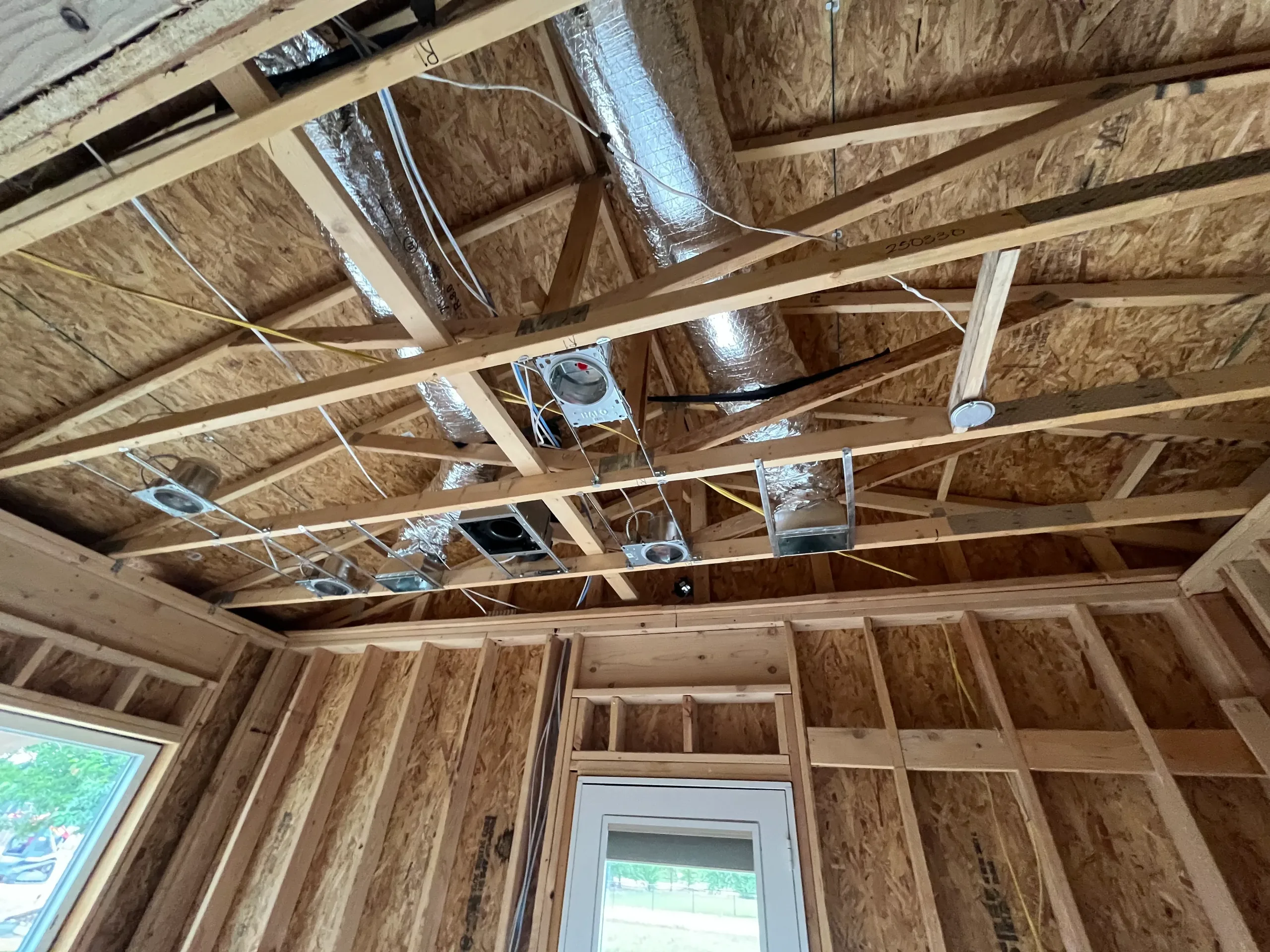
- Professional integration around HVAC ductwork and electrical systems
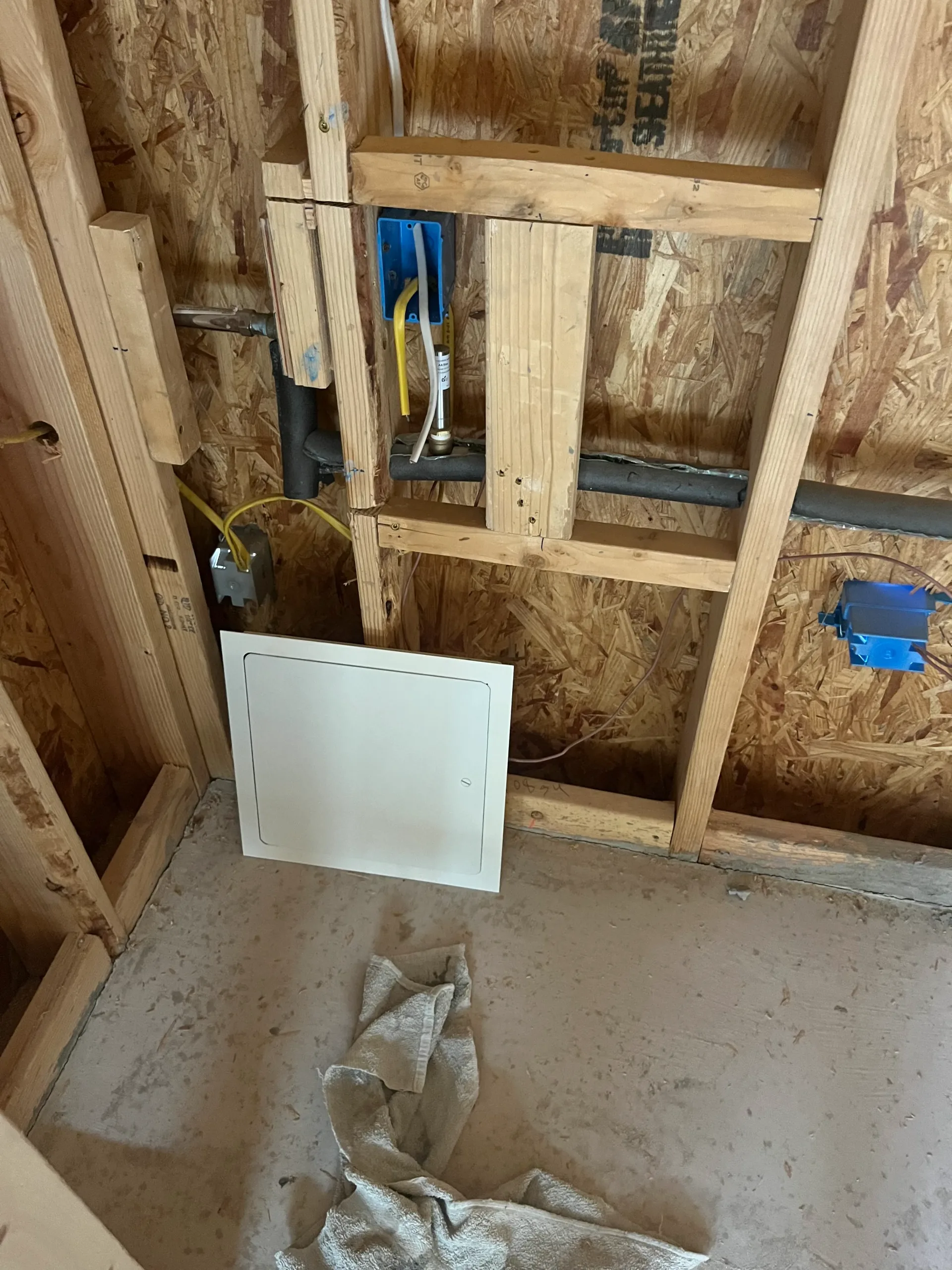
- Storage area fully insulated with closed-cell spray foam for temperature stability
- Zero thermal bridging through careful application around all framing members
Key Specifications
- Wall Insulation: 2-pound closed-cell spray foam, achieving R-13 to R-21 depending on cavity depth
- Ceiling Insulation: Blown-in fiberglass to R-49 minimum
- Storage Area: Complete spray foam coverage on walls and ceiling
- Air Sealing: All penetrations, electrical boxes, and transitions sealed with spray foam
- Vapor Barrier: Closed-cell spray foam functions as an integrated vapor barrier, helping control moisture movement
- Installation Time: Completed within standard new construction schedule
- Materials: Premium products from Owens Corning and Huntsman
Special Features
This project demonstrates Millers’ expertise in new construction insulation with strategic material selection for different building areas. The 2-pound closed-cell spray foam provided structural benefits in addition to thermal performance, while blown-in fiberglass offered superior attic coverage at an economical cost. Our team coordinated closely with other trades to protect HVAC ductwork, electrical systems, and ensure proper ventilation was maintained throughout. The result is a new home ready for decades of comfort and efficiency.